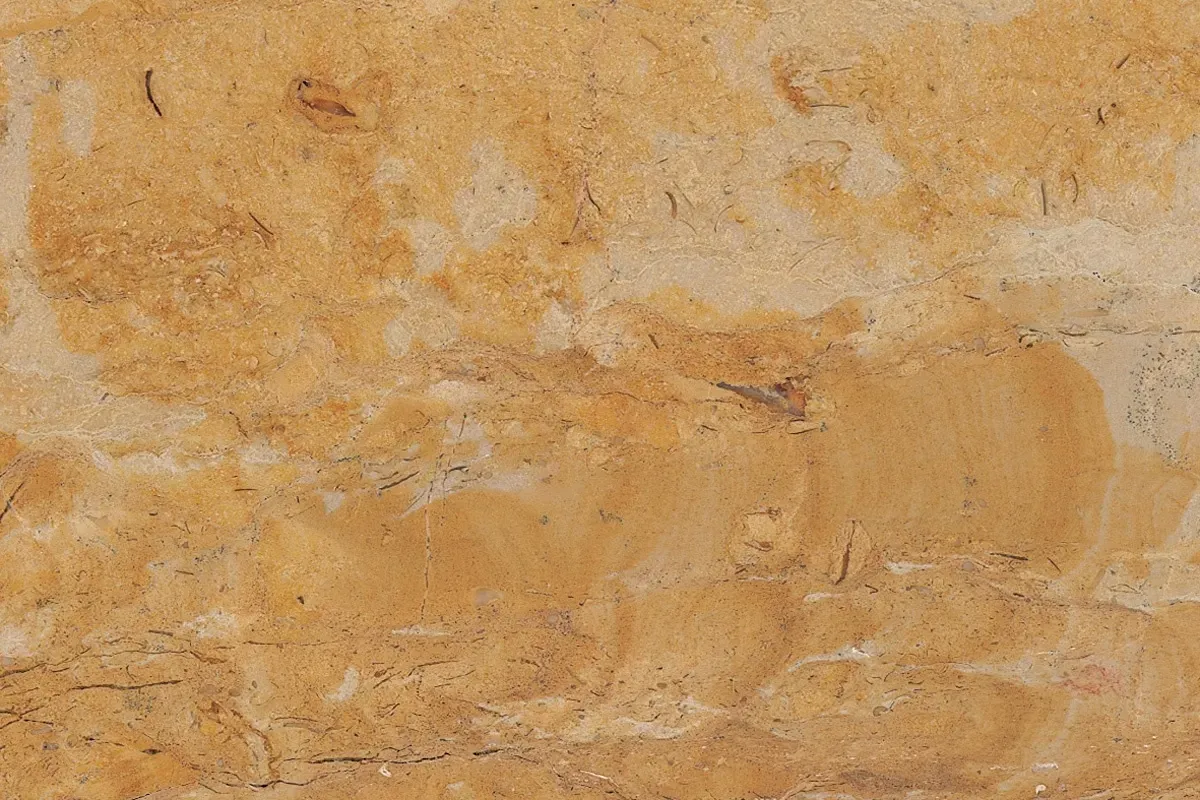

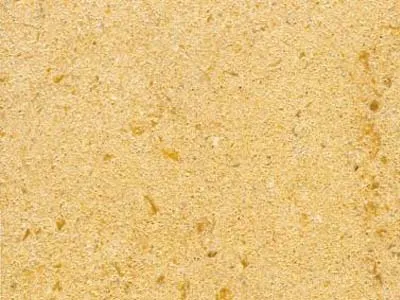
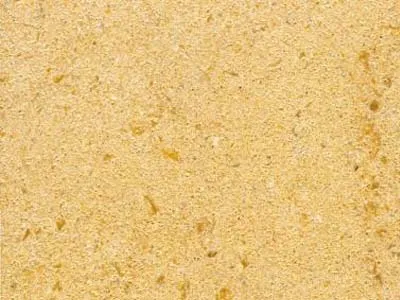
Jaumont is a distinguished limestone originating from France, celebrated for its warm yellow and gold tones. This natural stone features a fine, uniform grain that provides a consistent and elegant aesthetic, making it ideal for both interior and exterior applications. Its robust nature suits various finishes, including honed, polished, or textured surfaces, allowing designers to achieve specific visual effects. Jaumont is particularly effective for flooring, wall cladding, and decorative accents where a golden warmth is desired. Marmi di Carrara supplies Jaumont in blocks, standard slabs of 2 or 3 cm, and custom cut-to-size pieces. We provide high-resolution photos of actual slabs before purchase to ensure you select the exact shade and pattern of this French limestone. Request a quote to explore how Jaumont can enhance your project.
Petrographic description
Jaumont is a French limestone typically characterized by a warm yellow and gold hue.
Jaumont is a Limestone quarried in France, catalogued in the Marmi di Carrara atlas under the international reference ICFRLS02113. Its dominant tone is yellow & gold.
Like every limestone, it is supplied as raw blocks, gangsaw slabs in 2 and 3 cm and cut-to-size pieces made in our Carrara plants. Recommended finishes: honed, brushed, sandblasted, bush-hammered, split-face. Typical applications: interior and exterior floors, façades, pool surrounds, garden design, carved elements.
Availability varies with the quarry campaigns: before quoting we check current stock, block sizes and the selection grade, and we send photos of the actual slabs. Price and transport are confirmed by our technical office within one working day.
Jaumont Stone: complete guide
Overview
Jaumont Stone is an oolitic limestone from Lorraine with a characteristic ochre-yellow colour. It is chosen for its warm, bright tone and its long tradition in the architecture of the Metz area.
History and origin
It is quarried in north-eastern France, north of Metz, where for centuries it has been the typical building material for façades, churches and civic buildings. Its golden colour has given the local townscape a recognisable character. Today it is also used in restoration and in contemporary projects looking for a warm limestone with character. Marmi di Carrara supplies it on request.
Appearance
The background is ochre yellow, sometimes tending towards honey or rust, with a fine oolitic grain and small fossil fragments. Variations in tone between blocks and slabs are normal and part of its charm. Honed or brushed, it retains a matt, natural look, while bush-hammering accentuates its texture.
Uses
It is suitable for façade cladding, cornices, window sills, exposed masonry and interior walls. It can be used for interior floors with moderate traffic; it is not recommended for kitchen worktops or areas very exposed to staining.
Care and maintenance
Clean with neutral detergents and water, avoiding anti-limescale and acidic products. A water- and oil-repellent treatment reduces dirt absorption; outdoors, joints and protective treatments should be checked periodically.
- Classification
- oolitic limestone (calcareous stone)
- Density
- approx. 2,200-2,400 kg/m³ (indicative)
- Mohs hardness
- approx. 3
- Water absorption
- medium
- Main use
- façades, cladding, restoration
- Acid resistance
- low: sensitive to vinegar, citrus and anti-limescale products
FAQ
Is Jaumont suitable for outdoor use?
Limestone: suitable for façades and paving in temperate climates with a honed, brushed or bush-hammered finish. Tell us the climate and exposure of the project and we will recommend the right finish and thickness.
What is the price of Jaumont per m²?
Indicative price from €90/m² for polished 2 cm slabs ex works Carrara, VAT excluded. The final figure depends on selection, block size, finish and quantity; a personalised quote is free.
How is Jaumont shipped from Italy?
Slabs travel in wooden A-frames inside 20-foot containers (about 25 tonnes); blocks ship loose or in open-top containers. We quote FOB, CIF or door-to-door to any port or site.